1. The chemistry of taste
Sweetness
- Natural Sugars: The gentle baseline sweetness in green tea originates from simple carbohydrates, primarily sucrose, glucose, and fructose synthesized by the plant.
Amino acids and umami
- L-Theanine: A unique non-proteinogenic amino acid found almost exclusively in tea. It contributes a sweet, savory character to the cup and supports quiet focus without drowsiness.
- Glutamate: Works synergistically with L-theanine to provide foundational umami, giving matcha a rich, rounded, savory mouthfeel.
Bitterness and structure
- Caffeine: Imparts clean, crisp bitterness and mental alertness.
- Catechins (EGCG & ECG): These polyphenols are responsible for both bitterness and structured astringency.
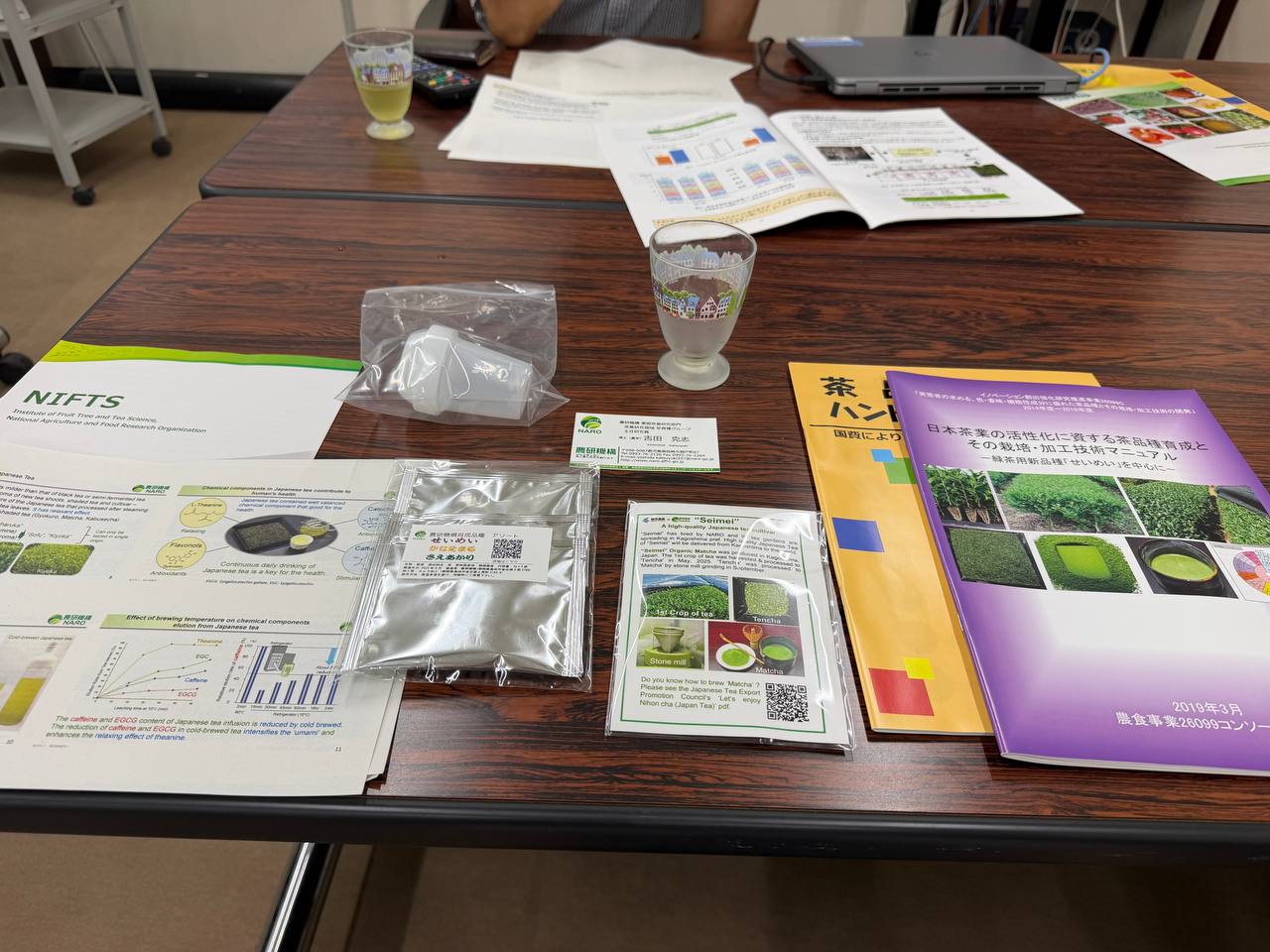
- Note on infusions: In brewed loose-leaf teas like sencha, brewing conditions can reduce heavy astringency. In matcha, the whole leaf is consumed, so the pre-harvest balance of catechins and amino acids is even more critical.
2. Shading physiology
The defining characteristic of matcha and tencha cultivation is shaded growth (fukukamushi / ōishita saibai). Halting direct photosynthesis triggers dramatic biochemical shifts:
- Increased chlorophyll: The plant surges chlorophyll production to capture whatever ambient light remains, resulting in the deep electric jade hue characteristic of high-grade tencha.
- Elevated amino acids: Without sunlight to convert L-theanine into bitter catechins, amino acid levels remain high, preserving sweetness and umami.
- Reduced catechins: Polyphenol synthesis slows down, dramatically cutting harsh astringency.
- Increased caffeine: Shading prompts the plant to elevate caffeine concentrations as a natural defense mechanism.
Direct cover vs. canopy shading
- Direct-cover shading (Jika-gake / 直掛け): Shade cloths rest directly atop the tea bushes. While common, they can abrade delicate buds and restrict airflow.
- Canopy shading (Tana-gake / 棚掛け): Shade material is suspended above the bushes, allowing even diffusion and unrestricted leaf expansion.
The real-world complexity: Shading is not a single formula. The final expression depends on cultivar, shade density, duration, temperature, and leaf maturity.
3. Whole-leaf suspension vs. brewed tea
- Whole-leaf ingestion: With matcha, the entire tencha leaf blade is micro-milled and suspended in water. You ingest 100% of the plant's water-insoluble nutrients, fat-soluble vitamins, and chlorophyll.
- Brewed teas: Sencha and gyokuro are steeped, after which the leaves are discarded.
- The gyokuro comparison: Gyokuro is also shaded and rich in L-theanine, but because it is infused rather than suspended, its cup is translucent and less opaque than matcha.
4. From field to stone
- Harvest and deep steaming: Freshly harvested leaves are immediately steamed to lock in color and aroma.
- Raw tencha: The leaves are cooled and dried without rolling, preserving the leaf structure needed for matcha.
- Refining: Stems, veins and woody material are removed to leave the pure leaf flakes that form a smooth suspension in water.
- Micro-milling: The refined tencha is slowly ground to 5–10 microns, preventing heat damage and preserving sweetness and green vibrancy.
5. The breeding frontier
- Agronomic resilience: NARO research continues to improve cultivar resistance to disease, frost and climate stress while reducing dependency on heavy interventions.
- Sensory evolution: New cultivar crosses aim to increase sweetness and L-theanine, while refining aroma signatures for both traditional and modern café applications.